

Home » High Protein Strawberry Cheesecake

This post may contain affiliate links
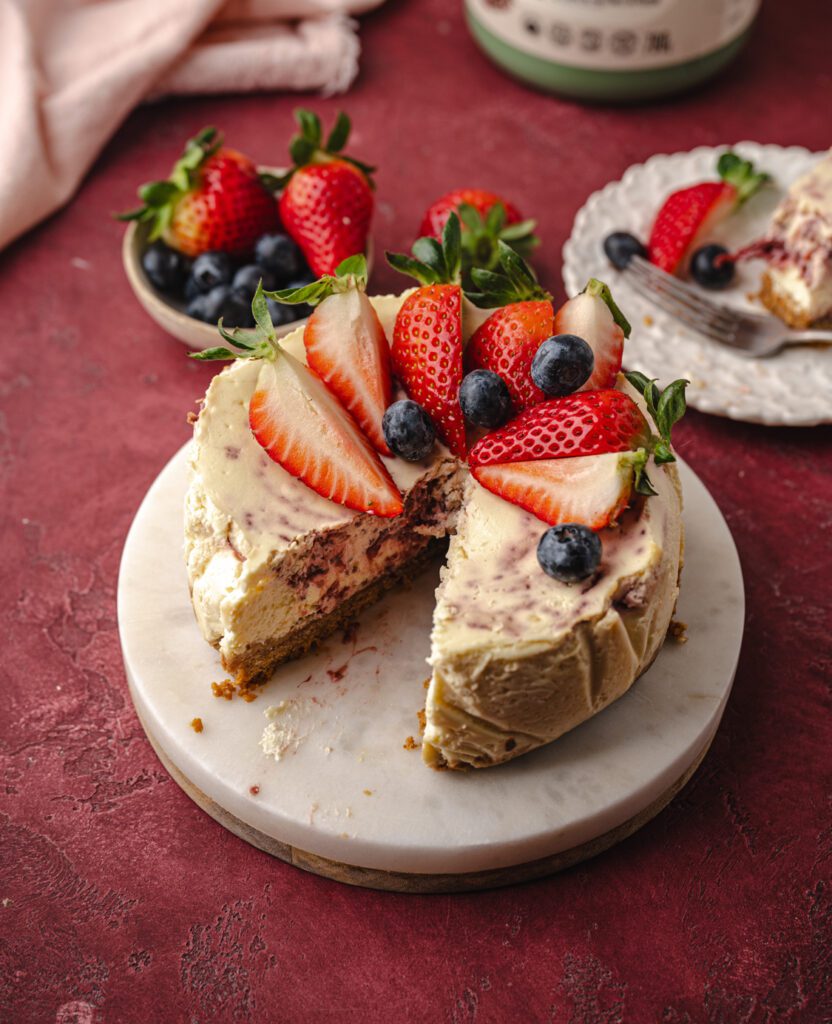
I’ve spent years in the kitchen perfecting the art of the cheesecake. Back in my vegan days, I was the queen of the soaked-cashew-and-coconut-cream base (and if that’s your vibe, I have so many of those on the blog; click here to check them out!). But as my journey has shifted toward “eating all the things,” my focus has moved to something new: protein, fiber and sweet treats that don’t send the blood sugar spiking! This high protein cheesecake checks all those boxes, AND it’s really delicious on top of it all!
I’ll be honest with you, it took a few tries to get this cake right. I’ve tried those viral “high protein” recipes online and, frankly? They tasted awful. Most of them are crustless, which is fine (if you don’t actually want to enjoy the cake), BUT if you want to eat cottage cheese and yogurt blended together with maple syrup and eggs, go for it. I call that breakfast, and what I am trying to enjoy here is dessert!
I wanted a real, baked, indulgent cheesecake that just happens to be smarter. I think I cracked the code.
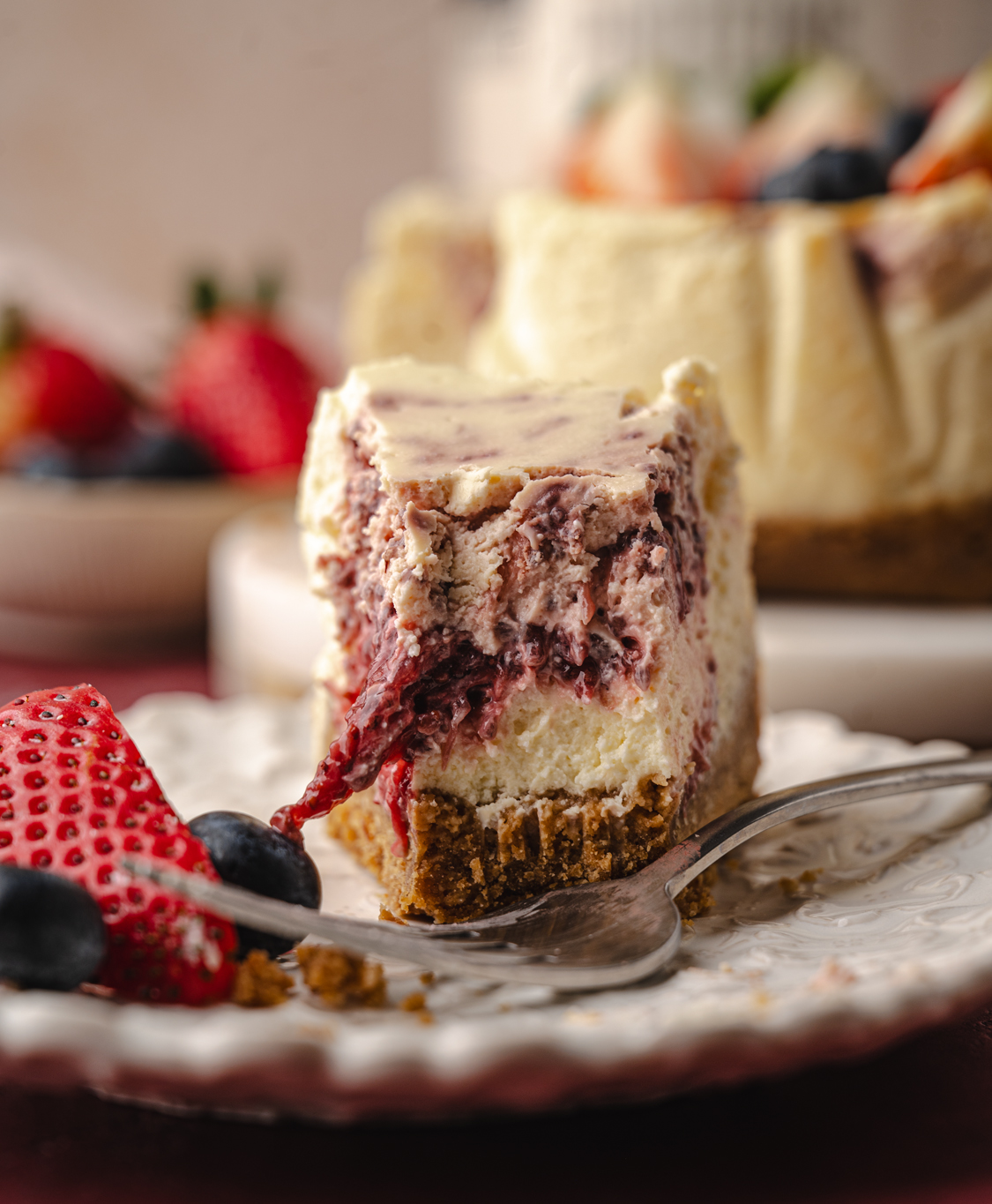
I love cheesecake with a cookie crust, and what makes that perfect is that you don’t need to add any additional sugar to the crust because it’s already in the cookies. Most people put their protein powder in the batter, but I put it in the crust. Stick with me, because this makes a lot more sense. Many of you seem to hate protein powder, and I fear it’s because you are not using the right one.
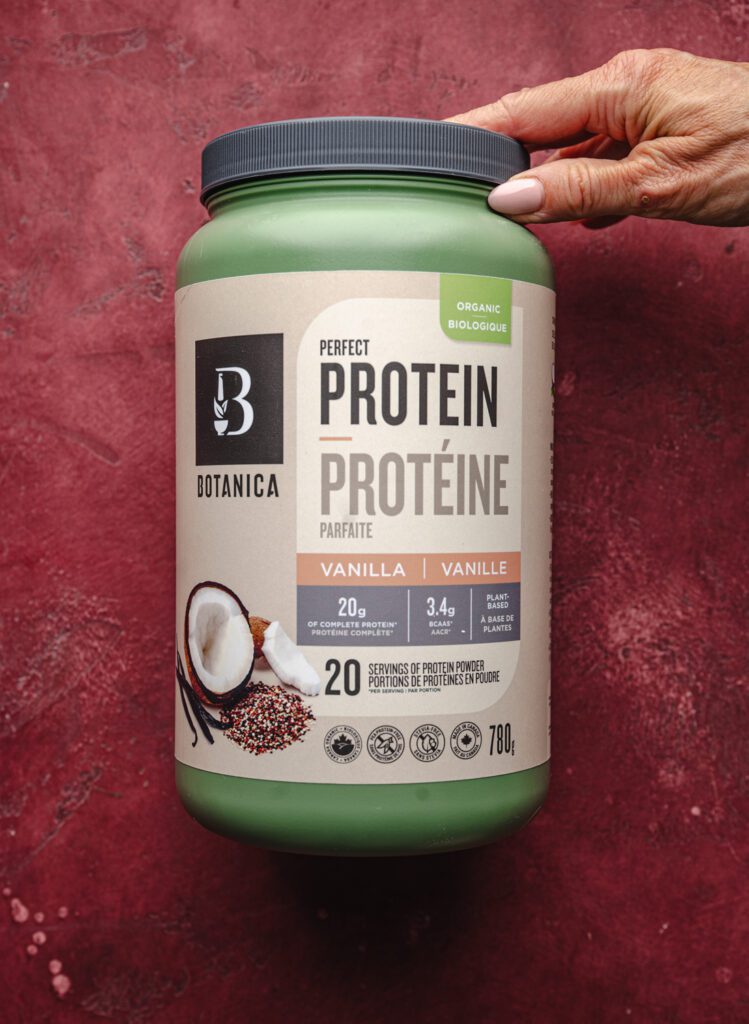
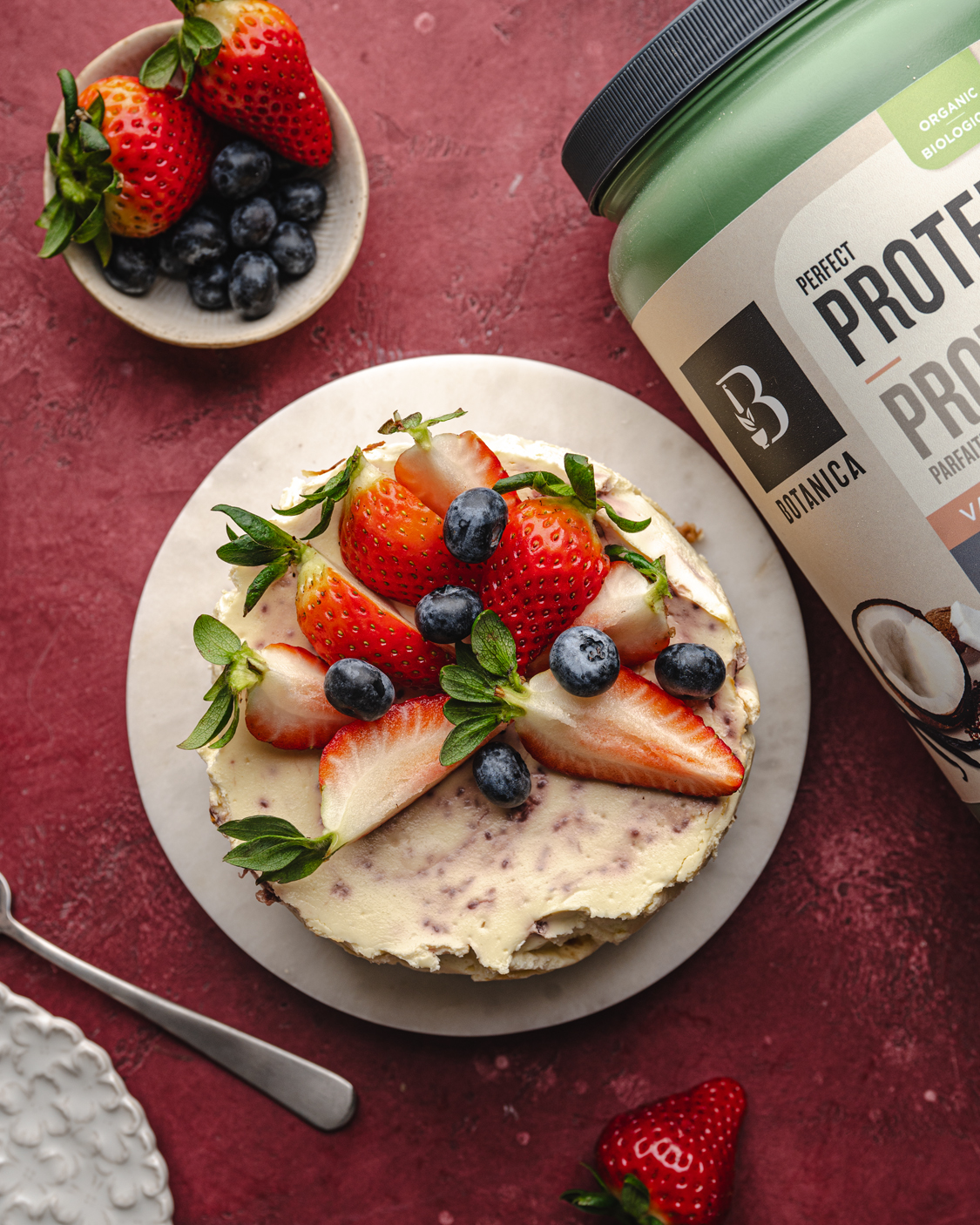
A GOOD protein powder doesn’t interfere with the recipe; it enhances it. Botanica is that for me, I’ve been baking with it for years, and there’s a reason for that – it works, and it tastes damn good. Adding the protein to the crust won’t compromise any of that silky texture of the filling. By mixing Botanica Vanilla Protein into the oat cookie crumbs, you get a boost of protein and a hit of vanilla flavour right in the base. I want to encourage you to try using your protein powders differently. Putting the protein in the crust just hits different.
Sugar is sugar is sugar, no matter what form you eat it in. I use maple syrup for tons of recipes, but it doesn’t always serve a benefit to the final result or texture of something. For this recipe, I went really low on granulated sugar with only 1/4 cup in the filling. Once you try this, you will realize you don’t need to add that much sugar to your sweets. Just enough, and your body will thank you. Over time, your taste buds will change, and you can sing my praises in the comments. HAHA.
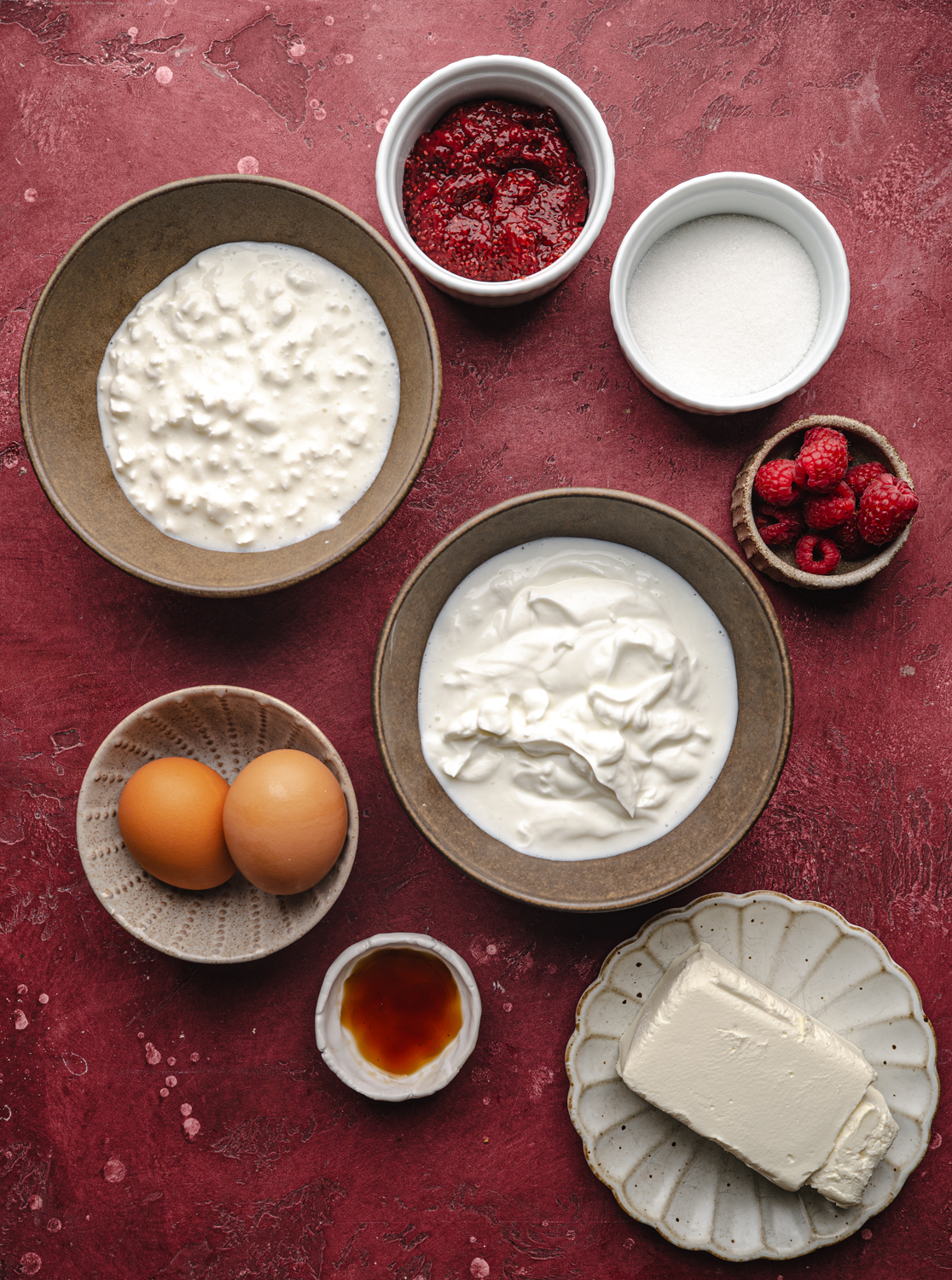
The ingredients for this protein cheesecake are straight forward and easy to find. You likely already have most of them! Here is what you’ll need to make a cheesecake that’s secretly healthy and obviously delicious.
When people ask, is cheesecake healthy?, they’re usually thinking of the heavy, sugar-laden slices that leave you feeling sluggish. This version isn’t like that!
Let me put this simply: protein. Cottage cheese is high in protein, and even though on its own it might not have the flavour you’d think of when you think of cheesecake, it actually provides the perfect amount of tang to round out the sweetness from the strawberry chia jam. I’ve gotten the question a few times, which is, “Can I use ricotta cheese instead of cottage cheese?” To answer that, I say yes, but first hear me out…
Let’s talk about moisture and curds. Ricotta is “dryer” and has a grainier, more distinct curd structure. Even after a heavy session in the food processor, ricotta tends to keep a slightly sandy mouthfeel when baked. Cottage cheese, on the other hand, has a higher moisture content and curds that are held together by whey proteins. When you hit it with high-speed blades, those curds emulsify into a liquid that is remarkably similar to a heavy cream base.
Then there is the protein profile. Cottage cheese is packed with casein, a slow-digesting protein that provides incredible structural integrity when heated. This means we can cut back on the heavy fats (like extra cream or butter) because the casein “weights” the batter, giving you that dense, New York-style bite without the calorie bomb. Combined with the acidity of the Greek yogurt, it creates a chemical reaction that helps the eggs set into a stable, silky custard rather than a rubbery mess. It’s not just “healthy”, it’s actually better chemistry for a small-batch bake.
Making this cheesecake takes a bit of time, but the process itself is very easy and totally worth it!
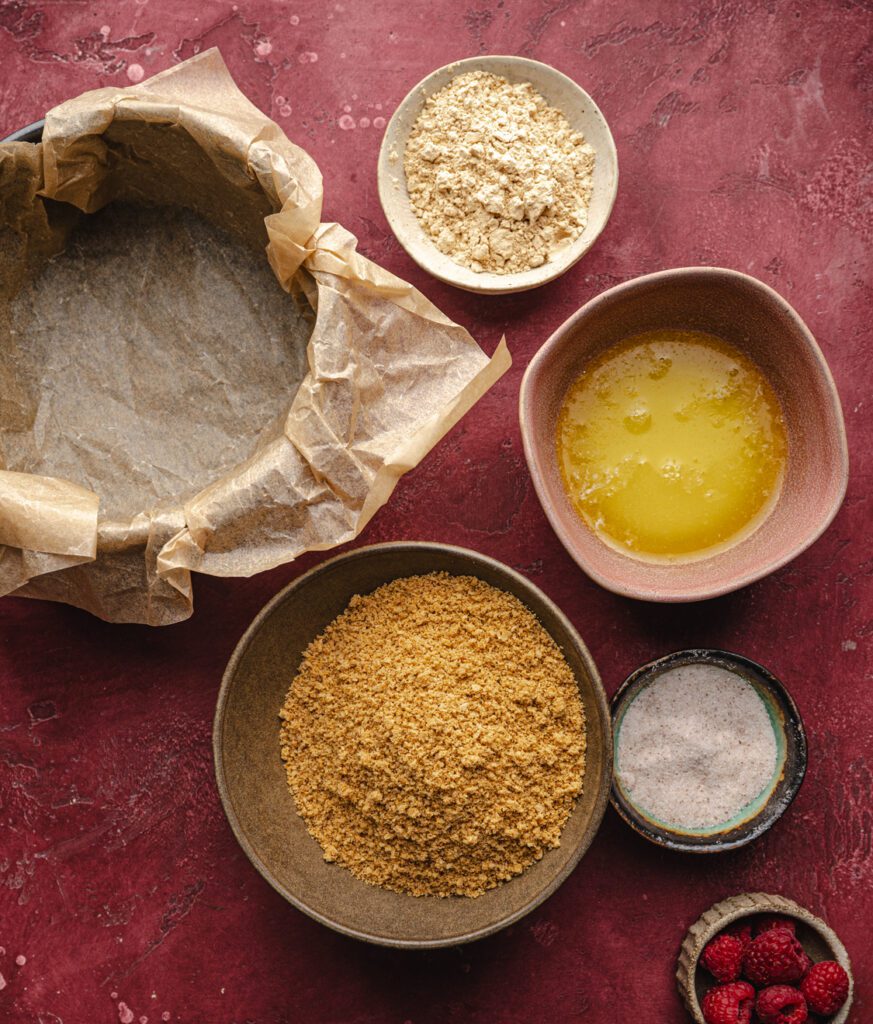
Preheat your oven to 350°F. Line your 6-inch springform pan; this is the perfect size for a small-batch cake. Mix your crumbs, protein powder, and butter, then press them firmly into the bottom. Bake for 15 minutes. Pro tip: Let the crust cool completely before adding the filling to prevent a soggy bottom.
Drop the oven temp to 300°F. This is where the magic happens. Throw everything (except the jam) into a food processor. Blend it longer than you think. You want the cottage cheese completely pulverized until the batter is like liquid silk.
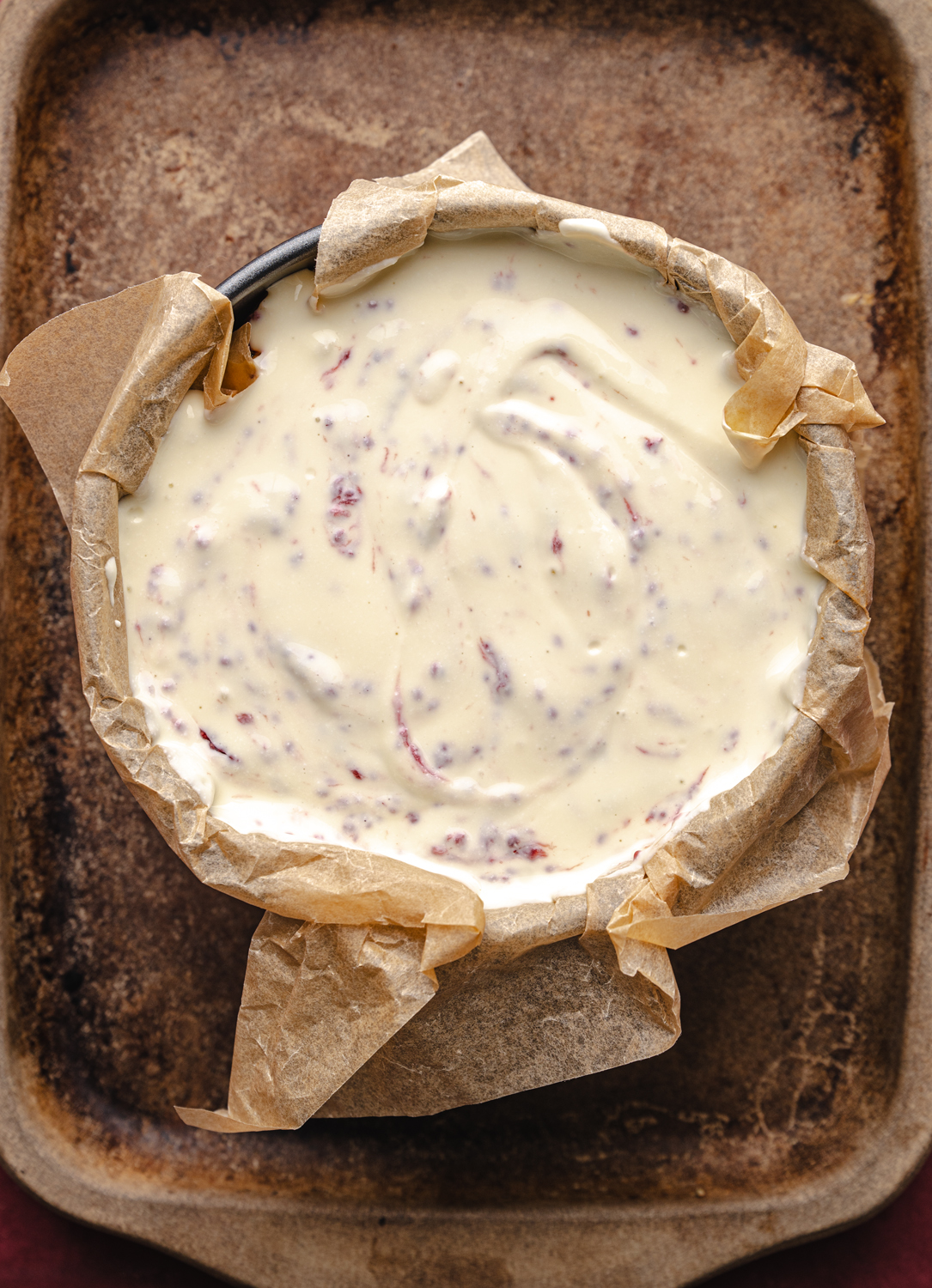
Pour the creamy batter over your completely cooled crust. Drop dollops of your strawberry jam on top and use a knife to create those nostalgic swirls.
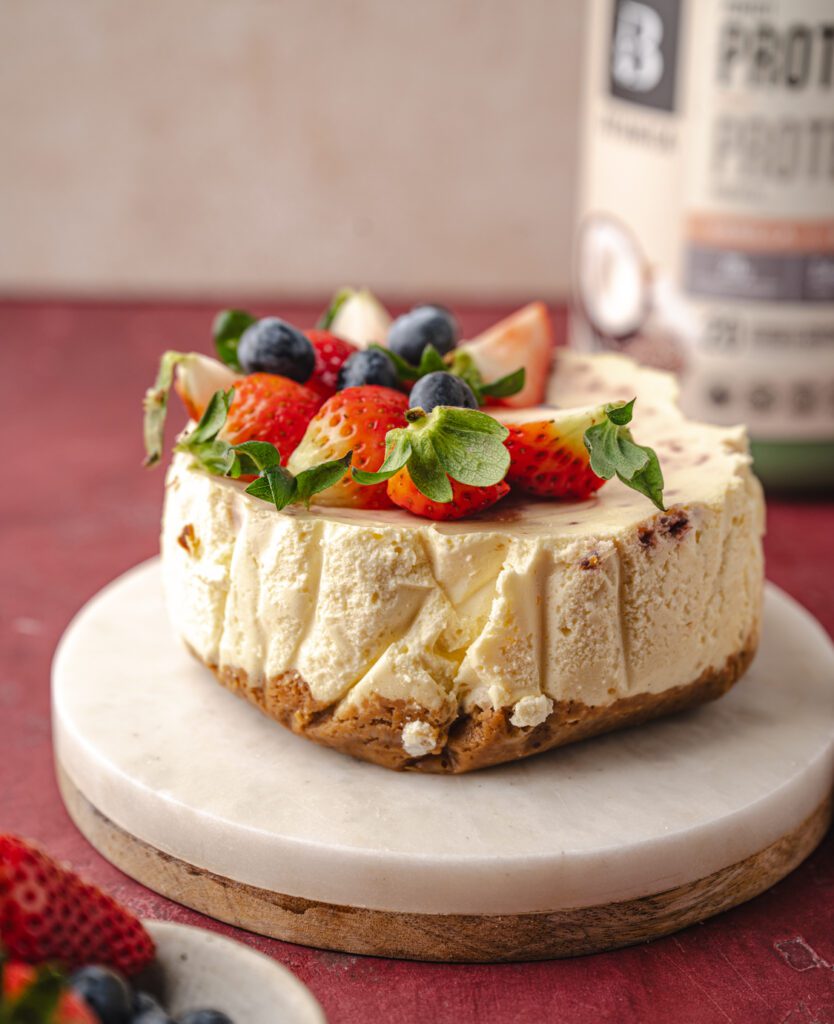
Bake for 55–60 minutes. Here’s the gold rule: The center should still have a little jiggle. If it’s stiff, you’ve overbaked it. Let it cool in the oven with the door cracked open. Once at room temp, chill it for at least 4–6 hours. If you can handle it, overnight is even better.
Cheesecake is notorious for being “fussy,” but I promise it’s actually quite forgiving if you know what to look for. If things go sideways, here is how to pivot.
There are usually two culprits here: over-beating or thermal shock.
Because we are using Greek yogurt and blended cottage cheese, this batter will look thinner than a traditional Philadelphia cream cheese recipe. Don’t panic. It should look like thick pancake batter, not a dough. If it feels like water, you may have used a “low-fat” yogurt that has too much liquid whey. You can whisk in an extra teaspoon of cornstarch or protein powder to help bind it, but generally, the eggs will do the heavy lifting once the heat hits.
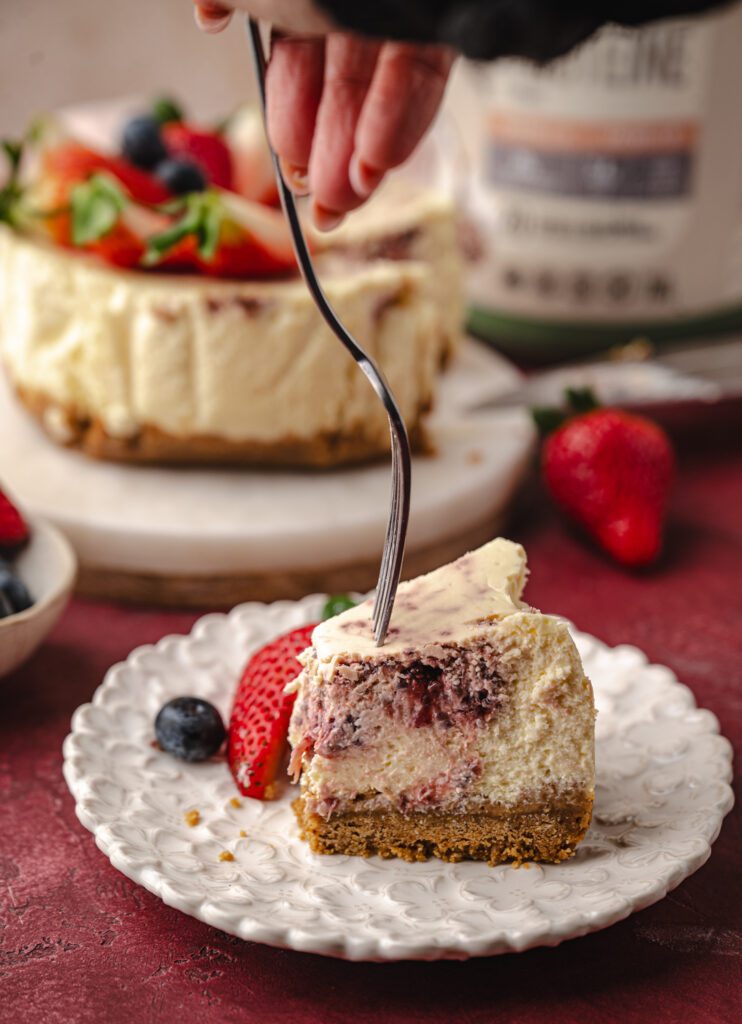
How do you know it’s actually done? If you shake the pan and the whole thing ripples like a bowl of milk, it needs 5–10 more minutes. If only a small circle in the very center (about the size of a quarter) wobbles slightly while the edges are firm, take it out. It will continue to firm up as it cools.
Can I make this dairy-free? This specific recipe relies on the protein structure of dairy. If you want to make a dairy free cheesecake, click here!
Do my ingredients have to be at room temperature? YES!!! They actually do; this makes a huge difference when mixing, as it ensures everything has the opportunity to become smooth.
Is this gluten-free? Only if you use gluten free cookies! The choice is yours.
Can I use a different fruit? Absolutely. While a strawberry cheesecake recipe is a classic, you can swirl in blueberry jam, raspberry jam, or even lemon curd.
Gluten Free Lemon Cheesecake Bars
Food Photographer and Recipe Developer based in Toronto, Canada.

Join my mailing list!
*Macros are provided as an estimate for convenience. Your final numbers will vary depending on ingredient brands, substitutions, and how you portion the recipe.


4 Responses
hi! I’m excited to try this but idk what oat cookies are haha. Are they oatmeal cookies?
Hi Ashley! I use Nairns Oat biscuits but graham cookies work too! Use your fave biscuit to create the crumbs. I hope That helps! xx
https://a.co/d/0i9OKRUm
cannot wait to try recipe
Omg its a keeper for sure!