Home » Homemade Mayonnaise
This post may contain affiliate links
When I decided to put this homemade mayonnaise on the blog, it got me thinking, why, if something is so darn easy, do so many of us go for the store-bought version instead? I understand the convenience, I understand time, but what I can’t understand is the taste. Homemade is just better in every single category.
From grabbing the ingredients to spreading the mayo, everything takes about 15 minutes, and that’s with both hands tied behind your back while blindfolded! Okay, all jokes aside, this recipe doesn’t get any easier. The ingredients are basic, and all you need is either a handheld immersion blender, a food processor or a blender. I try to use the first two, as I find using blenders for anything other than smoothies a real pain in the ass.
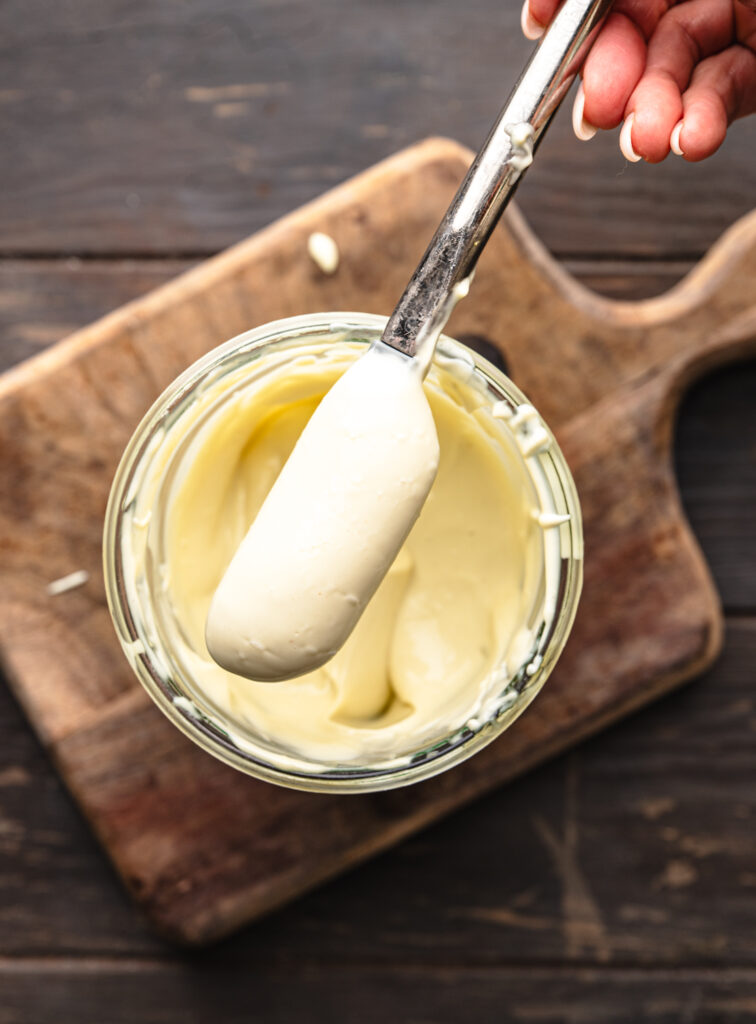
How did this recipe come to be? Well, it started with a burger bowl (coming soon!). I didn’t have any mayo in the fridge, but I had all the ingredients to make my own. I desperately wanted a “big mac sauce” for my bowl, and the base of that is, you guessed it, MAYO. I wanted to add fries to my bowl because what is a burger without fries? Hopefully, you see the method to my madness. At any rate, that’s how it all started. I think I tried making mayo once before, but this time I was pretty serious about it and surprised at how quickly it came together.
And that is really the beauty of this homemade mayo. It is one of those simple kitchen staples that make everything else easier. Sauces, dressings, dips, bowls, sandwiches, wraps, tuna salad, egg salad, chicken salad, and once you have a jar in the fridge, you will find a hundred ways to use it.
In many ways, yes, healthy homemade mayonnaise can be a better option than store-bought because you control the ingredients and there are no preservatives.
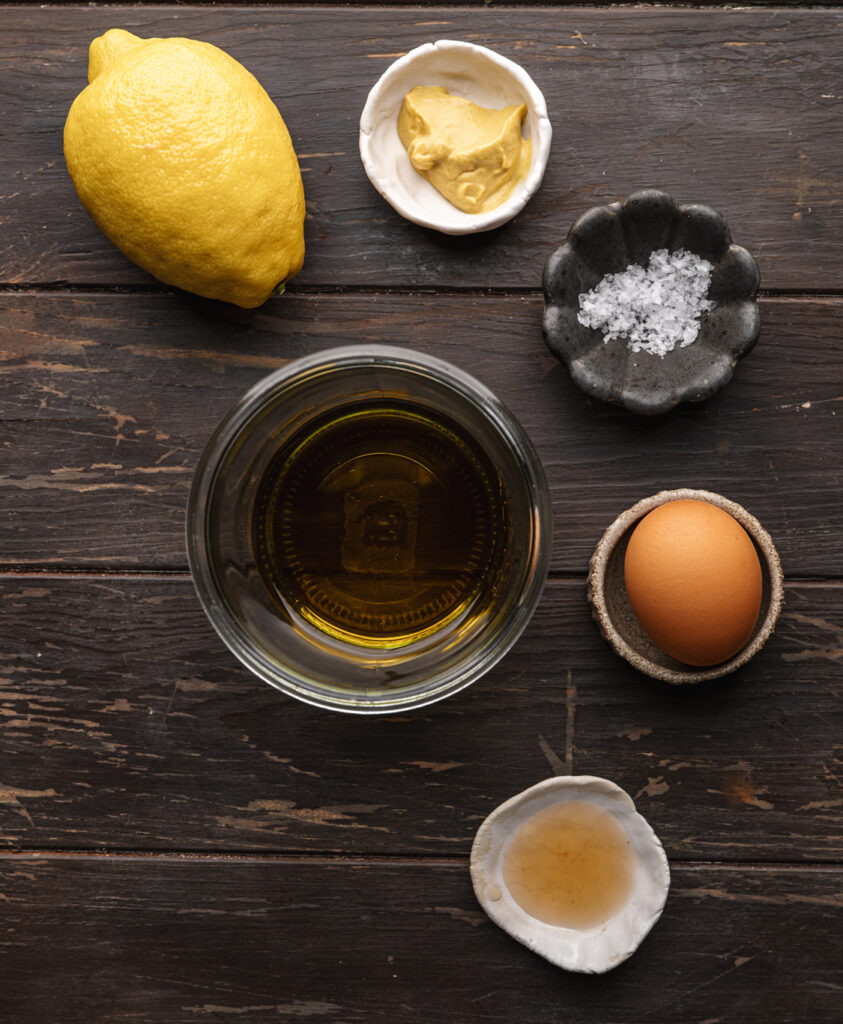
Many store-bought mayos contain oils you may not love, added sugars, preservatives, stabilizers, and ingredients that are there mostly to extend shelf life. Homemade mayo is different. It is fresh, simple, and made with real ingredients you can actually name. There are 6 ingredients in this mayo; that is it. No unnecessary fillers and no mystery ingredients. Because there are no fillers or preservatives, it won’t last as long, but honestly, it will likely be all gone before it goes bad.
Let’s talk about what not to use, because I want to be very loud about this point. Do not use olive oil as the base for your mayonnaise.
I tried. I really did. I thought it would be the healthier choice, but the result was absolutely trash-worthy. I hate wasting food, but let me tell you, what came out of that experiment was inedible. The problem in this case is that good olive oil has flavour. If you are buying the good stuff, it will have grassy notes, fruity notes, or even spicy notes, depending on where it is from. That is the magic of delicious olive oil. I use it in so many recipes, from baking to salad dressings, but for mayonnaise, it is not the move.
Want to make a mayo you’re going to love, and everyone is going to ask for the recipe for? Use a neutral oil; you still want to choose a good quality oil, but not one that will overpower the flavour of your mayo. I went with this avocado oil the second time around and was not at all disappointed.
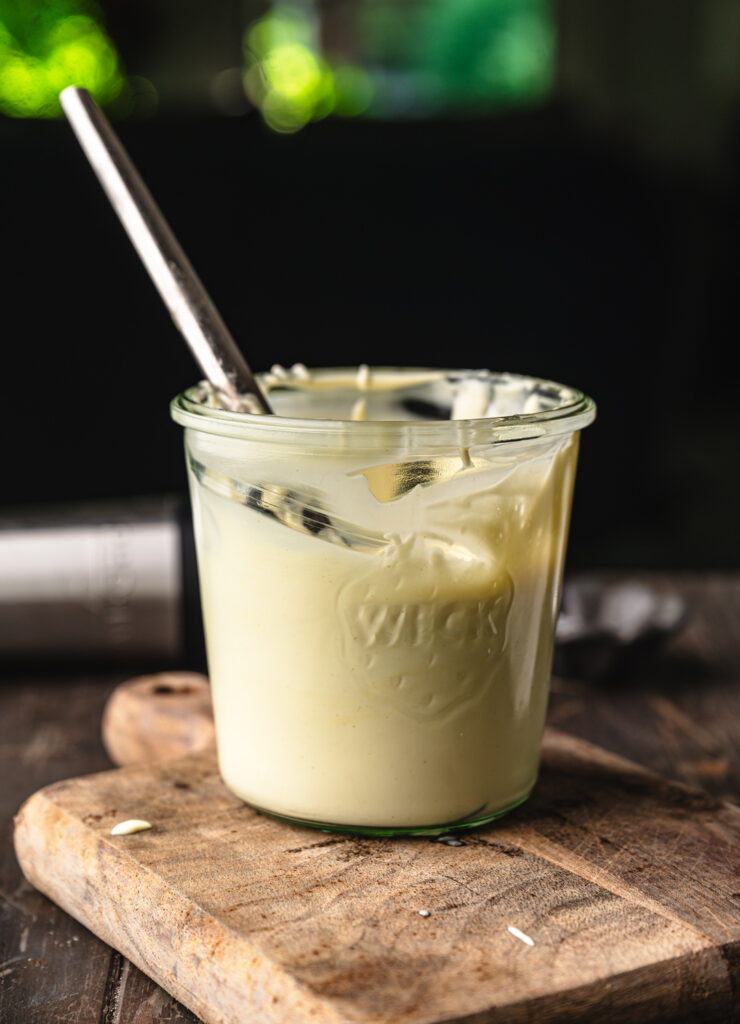
Making this mayo will take you little to no time, just gather your ingredients, pull out the immersion blender and let’s go!
Use a wide-mouthed glass jar that fits your immersion blender. This makes the process easy and keeps cleanup minimal. You can also make this in a food processor, but the immersion blender method is my favourite. I would avoid using a regular blender; it’s an annoying process, and again, just trust me!
Add the raw egg, Dijon mustard, and lemon juice to the jar. These ingredients are the foundation of your mayo and will help everything emulsify once the oil is added. Place the immersion blender into the jar and begin blending. You want to keep the blender low in the jar at first so the egg and Dijon start to pull the oil into the mixture properly.
Slowly pour in the avocado oil while blending the entire time. Do not rush this part. You are looking for the mixture to begin thickening and turning pale and creamy. As you blend, the mayo will start to double in size and thicken, and you’ll see the texture change from loose and oily to creamy and cohesive.
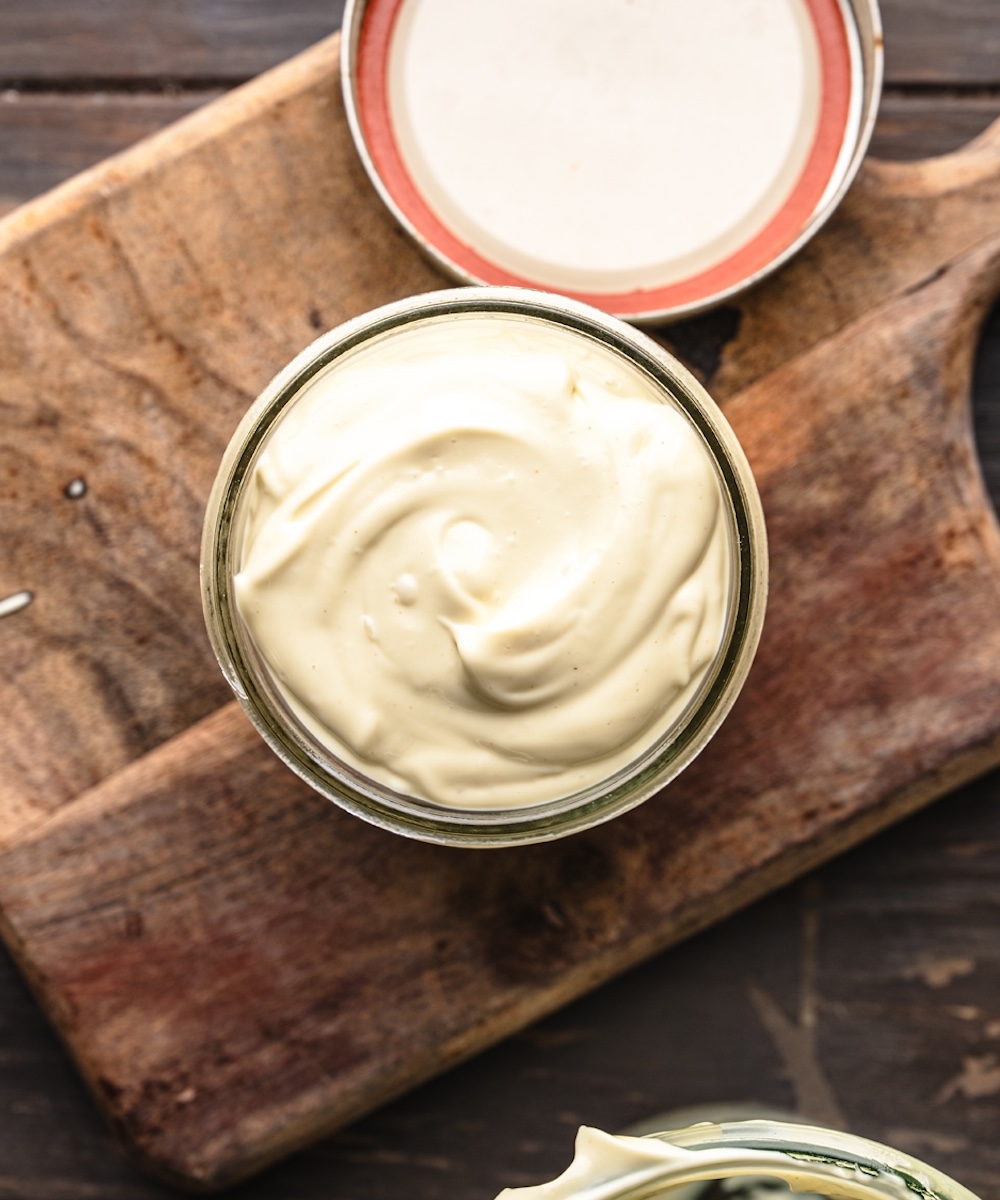
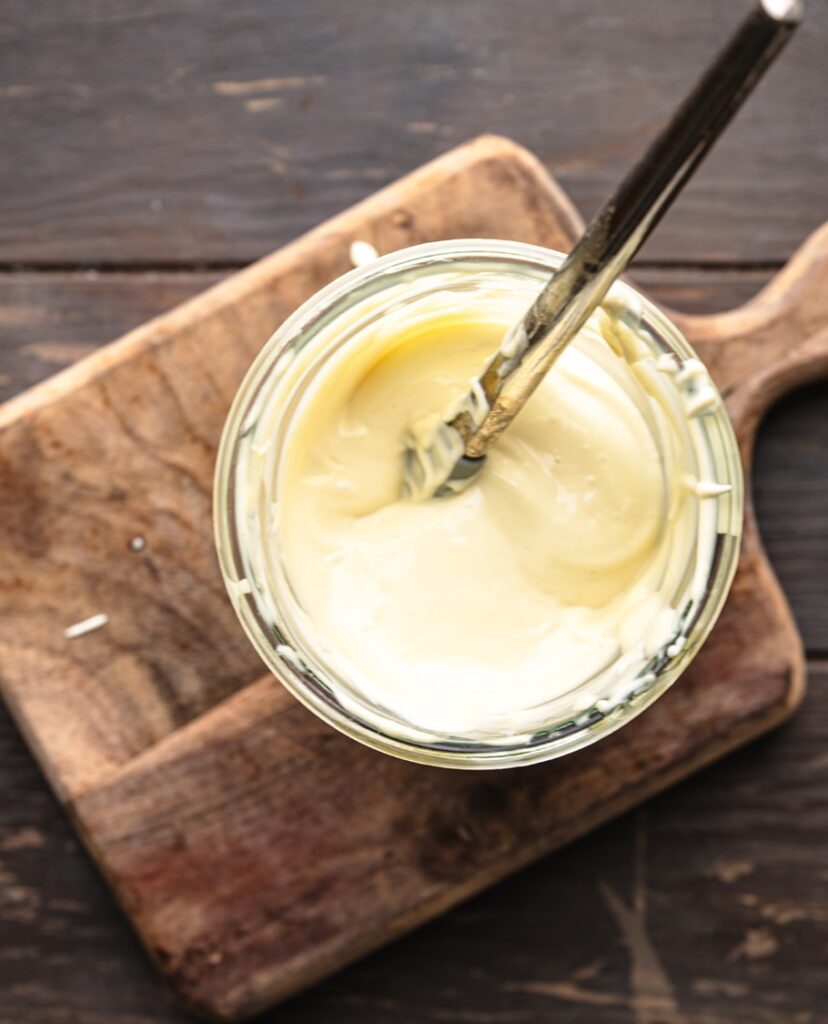
Once the mayo has thickened, add salt to taste. Blend briefly again, then scrape the mayo into a small mason jar. This is how mayo is made at its simplest: egg, oil, acid, mustard, and a little patience!
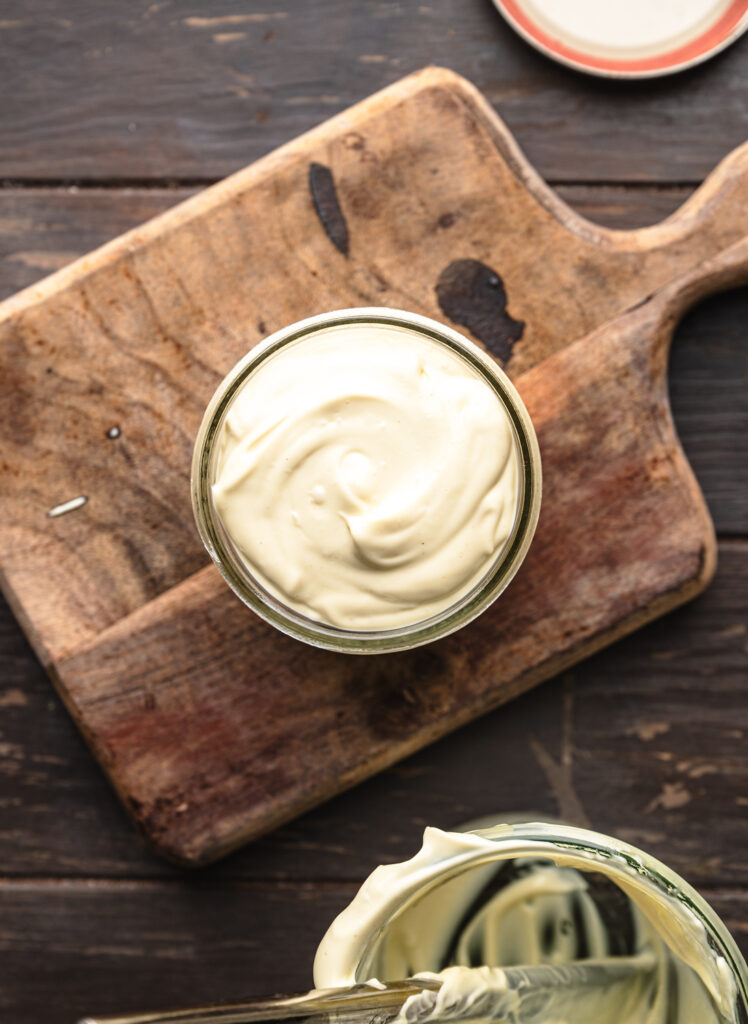
The lack of preservatives in this homemade mayonnaise will make its shelf life (or fridge life) shorter, but that’s okay because it’s so delicious that it’s going to disappear real quick. Store it in a clean, airtight jar in the fridge and use it within two weeks. Always use a clean spoon when scooping it out, and keep it cold. If it smells off, changes colour, separates strangely, or tastes sour in a way that does not feel right, it is time to make a new batch.
Can I make homemade mayonnaise without an immersion blender? Yes. You can make it in a food processor, and some people use a blender. I prefer an immersion blender because it is fast, easy, and less annoying to clean.
Why is my homemade mayo not thickening? The oil may have been added too quickly, or the mixture may not have emulsified properly. Make sure to blend continuously and pour the oil slowly. Using an immersion blender in a narrow jar also helps.
Is homemade mayo as thick as store-bought? No, not always. This recipe is creamy and slightly looser than store-bought mayonnaise because it does not contain commercial stabilizers. That is normal.
How long does homemade mayo last? Homemade mayo lasts up to two weeks in the fridge when stored in a clean, airtight jar.
What can I use homemade mayonnaise for? Use it in sauces, dips, dressings, burger bowls, sandwiches, wraps, egg salad, tuna salad, chicken salad, or anywhere you would use regular mayo.
I would love to hear what you used it for! Leave a rating and review below, and let me know. Try these other homemade spreads next:
Food Photographer and Recipe Developer based in Toronto, Canada.

Join my mailing list!
*Macros are provided as an estimate for convenience. Your final numbers will vary depending on ingredient brands, substitutions, and how you portion the recipe.