

Home » Pan Seared Ribeye Steak

This post may contain affiliate links
I was vegan for 11 years. Strictly. I created a whole brand on it. I had amassed a rather large following, and then one day I woke up and said I can’t be vegan anymore; not that I don’t want to, but I can’t. As most of you know, I am a recovered alcoholic. I got sober in 2012. What does that, and veganism, have to do with this here rib steak recipe? Almost everything. The day I woke up, and my body rejected the plant-based way of life, wasn’t an easy day. I knew that I was going to have to come clean on Instagram and tell my almost entire vegan platform I was going to start eating animals. I thought ok, get ready to lose half of your following. I had braced myself for the onslaught of hate, and while some spewed venom, most said “good for you” because I listened to my body.
Getting sober wasn’t a choice, and neither was going back to eating meat. For years before getting sober, I rejected what my body was screaming at me every day, and in the last year or so of eating a fully plant-based diet, the same quiet rumblings were mostly ignored. Going through menopause has been a very intense experience for me, and giving my body the nutrients it was deprived of for so long was just no longer an option. WHEN THE BODY IS SCREAMING, you finally have to wake up and listen. So the connection you see is everything. I now listen to my body and give it what it needs to thrive, whether that is an 8-ounce rib steak or a nap. I work diligently on staying in tune, and when I step out of alignment, my body always pays the price.
Let 2026 be the year you finally heed the whispers your beautiful body is trying to communicate to you. I’ll be rooting for you! PS, this recipe here is what I’ll be eating to welcome in my next year of life! Alongside the most incredible cheesy mashed potatoes. Make these together, and you’ll be thanking yourself!
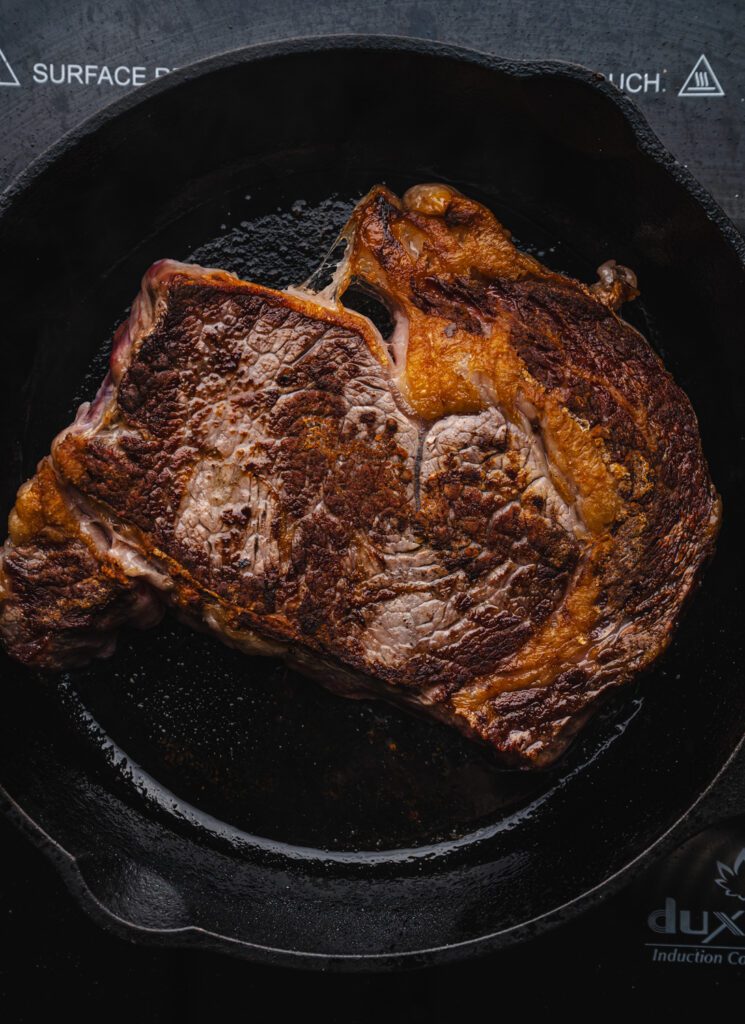
Learning how to cook a ribeye at home is one of those kitchen skills that feels quietly powerful and very liberating! A well-seared ribeye doesn’t need much, mostly a good cut of meat, a hot and reliable pan, patience, and trust in the process. When done right, pan-seared ribeye steak honestly tastes better than what you’d order at a steakhouse. With a deeply caramelized crust and a tender, juicy interior, my mouth is watering just thinking about it!
This method is simple, unfussy, and repeatable. No marinades, no complicated steps, no guesswork. Just a cast iron skillet, a properly prepared steak, and a few minutes of focused attention. If you’ve ever wondered how to pan sear a steak and get it just right, this is the method I return to every time.
Ribeye steak comes from the rib section of the cow and is prized for its marbling. Those fine streaks of fat running through the meat melt as the steak cooks, creating flavour, juiciness, and tenderness. The natural fat content makes a ribeye one of the most forgiving cuts to cook at home.
Both are excellent, and preference will be the only reason you choose one cut over the other. Boneless ribeye cooks more evenly and is easier to manage in a pan, especially if you’re learning how to cook a ribeye steak on the stove. Bone-in ribeye offers slightly deeper flavour but can cook less evenly near the bone.
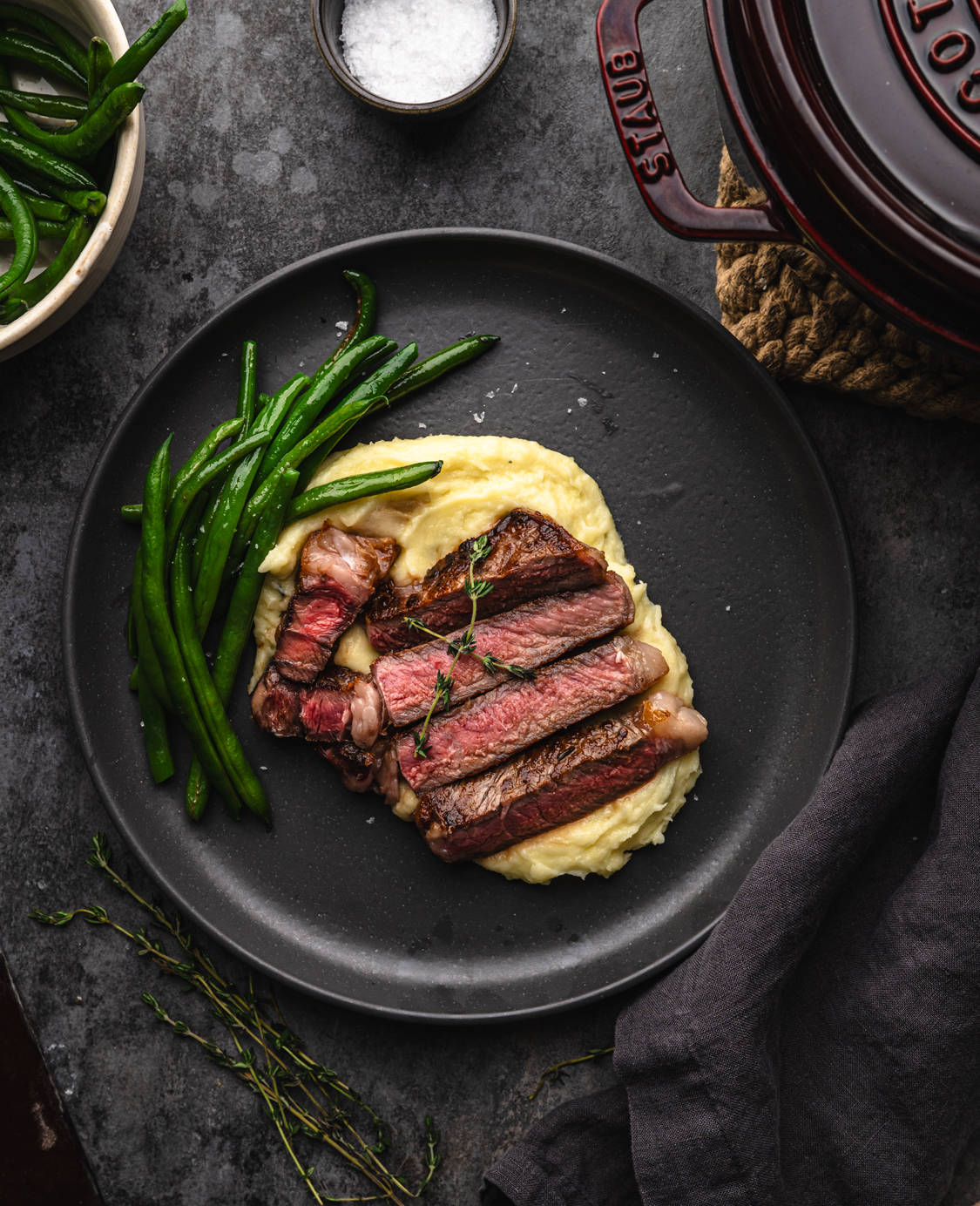
With only a handful of ingredients, know that you’ll make yourself the juiciest and tastiest steak you’ve ever had if you just trust the process! Here’s what you’ll need:
Look for a steak that is at least 1 to 1½ inches thick. Thicker steaks allow you to develop a good sear without overcooking the inside. Fat marbling matters more than colour. Fine, even fat throughout the steak will give you the best results when pan frying ribeye steak.
Ribeye is a naturally tender cut, but its real strength lies in fat distribution. That fat renders as the steak cooks, adding moisture and flavour. This is why ribeye shines when cooked quickly over high heat. Overcooking your ribeye will go against you; medium is what we are looking for!
First of all, cast iron is ideal for many applications. Especially when you need high, consistent heat. Cast iron skillets retain heat better than any other pan, which is exactly what you need for a proper sear. High, steady heat allows the steak to form a golden-brown crust without sticking to the pan. Here is the cast iron pan that I use and love!
Before you begin, make sure your pan is completely dry and preheated. A hot pan is essential, so take the time to preheat your pan, as it will prevent the steak from sticking.
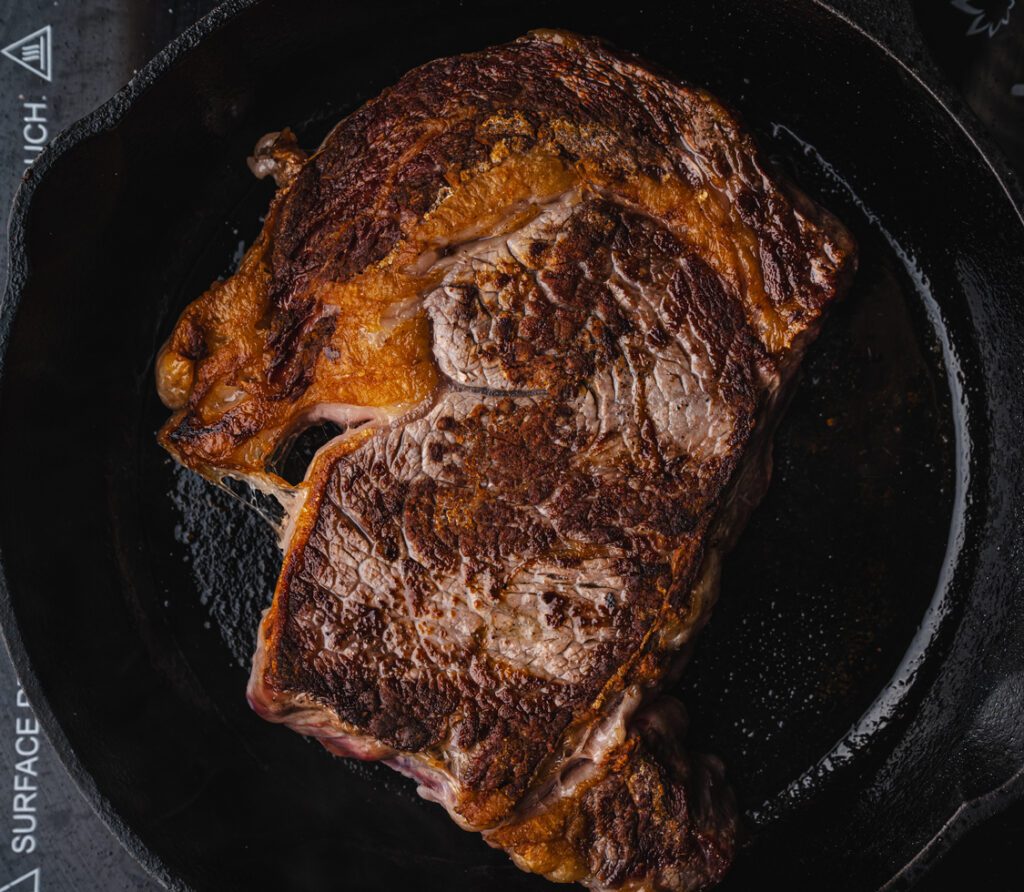
This method works for both medium-rare and medium doneness and can be adjusted slightly based on thickness.
Remove the steak from the fridge about two hours before cooking. Allowing it to come to room temperature helps it cook evenly and prevents a cold centre.
You can use a paper towel to blot the steak thoroughly. You typically do not want any moisture in the cooking process. Season generously with sea salt on all sides. Let the steak rest uncovered at room temperature. Just before cooking, blot again and add another light seasoning of salt.
Heat your cast iron skillet over high heat until very hot. Place the steak in the centre of the pan and immediately start timing. Sear for 3 to 4 minutes per side, depending on thickness. Do not move the steak while it sears; this is how you get that irresistible crust! Flip the steak, add butter and rosemary, and spoon the melted butter over the steak continuously. This adds extra flavour and encourages even cooking. Remove from the pan and let the steak rest for five minutes before slicing.
The most reliable way to check doneness is with a meat thermometer.
Remember that the steak will continue cooking slightly while resting.
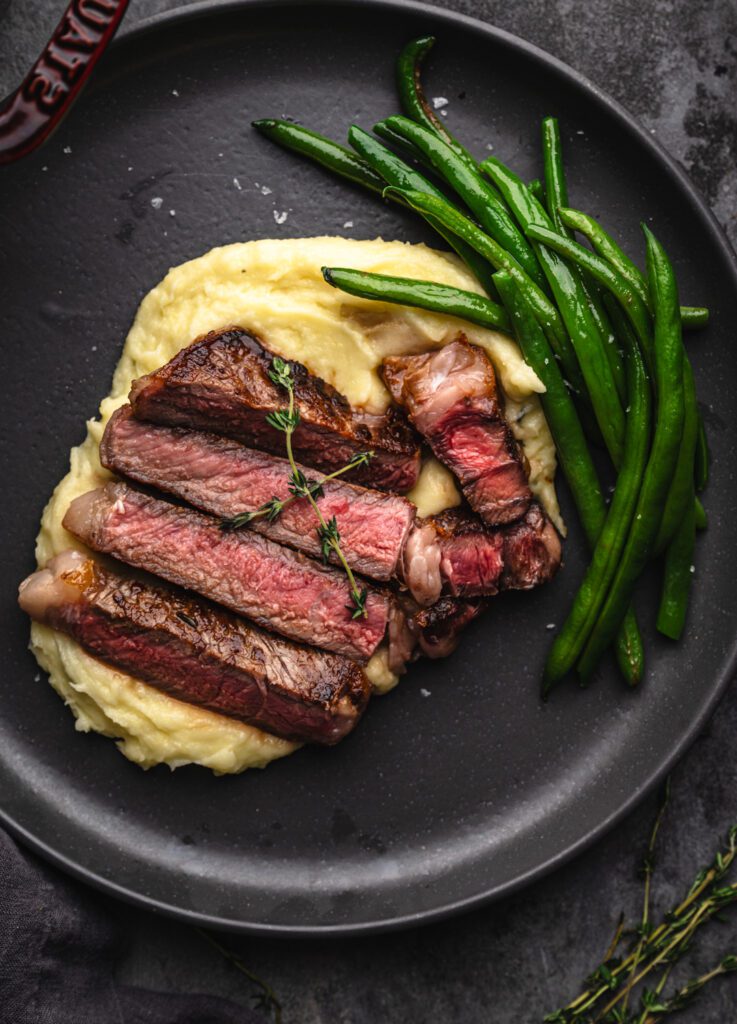
Letting your steak be the main attraction is definitely what it’s all about; HOWEVER, your pan-seared ribeye with some cheesy mashed potatoes and you’ve got a flavour bomb of a plate. Roasted vegetables, a crisp green salad, mashed potatoes, or sautéed greens would also be totally acceptable side dishes!
How long to pan sear a steak? Most ribeye steaks take 3 or 4 minutes per side over high heat, depending on thickness.
Can I cook ribeye without cast iron? You can, but cast iron gives the best sear and most consistent results. Here is the cast iron pan that I use.
Should I use oil in the pan? With ribeye, the natural fat is usually enough, and the butter will also help. If needed, add a small amount of high-smoke-point oil.
How do I know when to flip the steak? When it releases easily from the pan and has formed a crust.
Do I need to finish the steak in the oven? Only if the steak is very thick and hasn’t reached the desired internal temperature after searing.
Let me know how this method worked for you by leaving a rating and review below. Here are some delicious sides to pair with your ribeye!

Food Photographer and Recipe Developer based in Toronto, Canada.

Join my mailing list!
*Macros are provided as an estimate for convenience. Your final numbers will vary depending on ingredient brands, substitutions, and how you portion the recipe.


